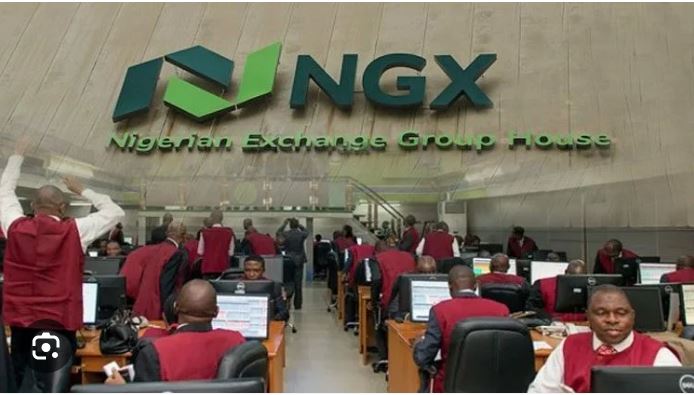
Nigeria’s stock market has continued its record-breaking rally, with the Nigerian Exchange (NGX) reaching another historic milestone as renewed investor confidence, driven largely by the Central Bank of Nigeria’s (CBN) bank recapitalisation programme, pushes equities to unprecedented levels.
The NGX All-Share Index (ASI) closed at 246,183.96 points on Monday, while the market’s total capitalisation climbed to an all-time high of ₦158.81 trillion. The latest surge added approximately ₦1.76 trillion to investors’ wealth in a single trading session, led by strong demand for banking and industrial stocks.
The remarkable performance marks one of the strongest rallies in the history of Nigeria’s capital market, with analysts attributing the momentum primarily to the CBN’s banking sector reforms.
Bank Recapitalisation Drives Market Rally
At the centre of the rally is the Central Bank’s bank recapitalisation policy, which required commercial banks to significantly increase their capital base ahead of the March 31, 2026 deadline.
Under the new requirements, banks with international operating licences were mandated to raise a minimum capital base of ₦500 billion, while those with national licences were required to meet a ₦200 billion threshold.
The recapitalisation exercise triggered a wave of equity offerings and renewed investor participation, creating sustained demand for banking stocks throughout the year.
The market responded strongly. During the first quarter of 2026 alone, the NGX All-Share Index advanced 29.35 percent, while investors gained nearly ₦29.83 trillion in market value by the conclusion of the recapitalisation exercise. The bullish momentum continued in the following months, with the index crossing the 250,000-point mark for the first time in Nigeria’s history in May.
Foreign Investors Return
A significant portion of the capital raised came from international investors, underscoring renewed foreign confidence in Nigeria’s financial sector.
According to industry data, 27.45 percent of the total recapitalisation funds originated from foreign investors. Foreign capital inflows into Nigeria’s banking sector surged 93.25 percent year-on-year to $13.53 billion in 2025, accounting for more than half of the country’s total foreign capital importation during the period.
The influx of overseas investment has strengthened bank balance sheets while boosting liquidity and trading activity on the Nigerian Exchange.
Banking Stocks Lead the Gains
The banking sector has emerged as the biggest beneficiary of the market rally.
As of July 17, the combined market capitalisation of Nigeria’s 12 listed deposit money banks, including Access Holdings, Guaranty Trust Holding Company (GTCO), Zenith Bank, First HoldCo, Fidelity Bank, and others, reached approximately ₦25.6 trillion—representing a 58.6 percent increase compared with December 2025.
Among the standout performers is First HoldCo, chaired by billionaire investor Femi Otedola. The financial institution reported a pre-tax profit of approximately $474 million for the first half of 2026, representing an 83 percent year-on-year increase, while its share price climbed to a record high.
Challenges Remain
Despite the impressive gains, analysts caution that the market’s ascent has not been without setbacks.
In June, Nigerian equities experienced a sharp correction that many market observers described as a “bloodbath,” temporarily wiping out billions in market value before investor confidence returned and prices rebounded.
Market participants also note that continued volatility in the naira remains an important risk factor. While equity returns have attracted both domestic and foreign investors, international portfolio managers continue to monitor Nigeria’s foreign exchange environment closely, as currency fluctuations could affect the real value of investment returns.
Outlook
With banks now better capitalised and investor sentiment remaining positive, analysts believe Nigeria’s equity market could maintain its upward trajectory in the near term. However, the sustainability of the rally will depend on macroeconomic stability, foreign exchange reforms, corporate earnings, and continued confidence in the country’s financial system.
For now, Nigeria’s stock market is enjoying one of its strongest periods on record, with the banking sector at the heart of a rally that has reshaped investor expectations and positioned the NGX among Africa’s best-performing exchanges in 2026.


