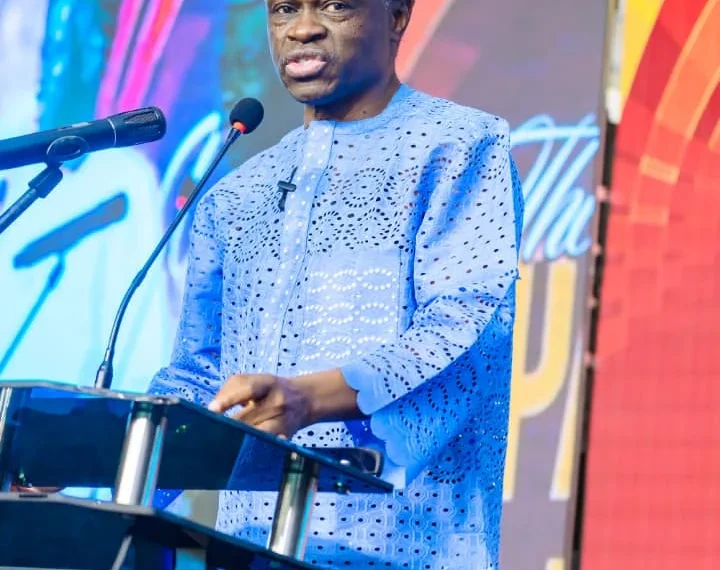
Kenyan scholar and Pan-Africanist Prof. Patrick Lumumba used a keynote in Uyo, Akwa Ibom State, on Thursday to tell African leaders to rely less on foreign expertise and build their own capacity in healthcare, infrastructure, agriculture and other critical sectors. He spoke at the first Pan-African Awakening Conference, organized by the Social Engagement and Reorientation Initiative (SERI). His argument was that depending on other countries, when trained professionals and local resources exist, reinforces neo-colonialism and holds back the continent. He wants a change of mindset and home-grown solutions to close the technological and economic gap with richer countries.
He gave examples. On infrastructure: “They teach us engineering, but largely, when we want to do our roads, we still call the Chinese to do them for us.” On health, he criticized leaders who seek treatment abroad: “Why is it that we train our doctors in universities, complete with PhDs and other specialisations, but even our ministers for health in African countries, when they are sick, they don’t go to hospitals in Abuja, or in Nairobi, or in Senegal? They are in London, and in Paris, and in Germany. Even our presidents don’t trust our ministries of health, yet they have allocations for them. Why is it?”
He applied the same logic to trade. “We produce what we do not consume, and consume what we do not produce,” he said. He pointed to milk and butter from the Netherlands, cotton grown in Africa while bedsheets are imported from Vietnam and China, and leather sold in Kano and Kaduna while bags come from Italian luxury brands. He told African countries to learn from China, India and South Korea but to adapt what they learn: “Once we have done so, let us give it an African flavour. Because when we give it an African flavour, that is when it becomes African.” He also said 22 African and Caribbean countries have joined in a common front to change what he called the negative, colonial mindset of leaders across the continent.
He asked Nigeria to lead the campaign against neo-colonialism, citing its people and resources, and he spoke directly to young Nigerians. “One out of every five Africans is Nigerian,” he said. “If you want to know how great this Nigeria could be, travel the world,” noting Nigerian doctors and businesspeople everywhere from Costa Rica to Tonga. He told them to look past ethnic and religious divisions: “You can only change Nigeria if you are a Nigerian citizen, not if you are a tribalist and an idiot. So be citizens.”
He praised Akwa Ibom for its roads. “Akwa Ibom has some of the best roads in the continent of Africa, and I have travelled Africa,” he said, adding that the state has oil and a GDP larger than some African countries. He was less impressed by national economic claims: “When Nigeria tells me, ‘Our economy is improving, we are now 500 billion,’ I don’t even clap my hands. Nigeria should be talking two trillion, then I’ll begin to clap my hands.”
Earlier, SERI’s founder and executive director, Engr. Ekemini Amos, said the organization exists to raise a new generation of Nigerian youths from different ethnic backgrounds with a shared purpose. “This gathering is not just another conference! This is the resurrection of a cause! The cause of African liberation was buried with Nkrumah! It was buried with Sankara! It was buried with Murtala Muhammed!” he said, adding that people had buried it “with our silence, with our japa syndrome, with our love for foreign things.” He asked stakeholders to partner with SERI on its mentorship efforts, including a Youth Membership Hub for people aged 18 to 35 and a Nation Builders Club for secondary school students aged 10 to 18.
The highlight was the unveiling of the SERI Mentorship Programme, the group’s flagship initiative, by Lumumba, who is its Chief Adviser and Grand Patron. He and his wife were also given titles: Akwa Ujo Africa, meaning the biggest voice in Africa, and Mkpouto Africa, meaning the jewel of Africa, respectively.


