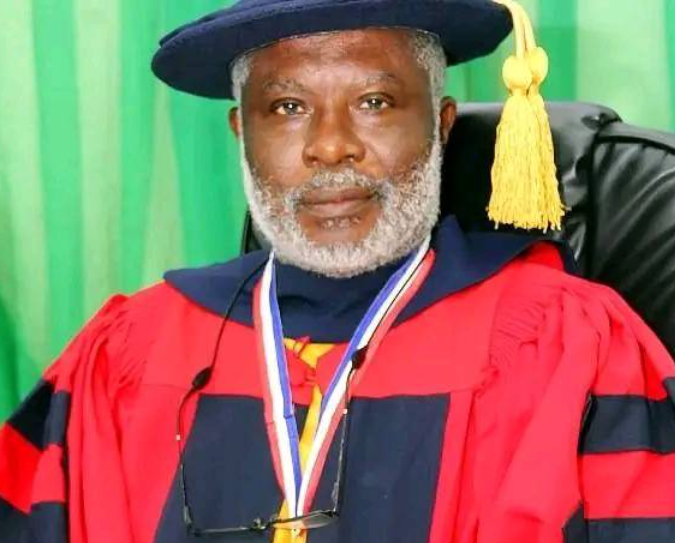
The Vice Chancellor of Rivers State University, Nkpolu-Oroworukwo, Port Harcourt, Prof. Isaac Zeb-Obipi, has urged the Federal Government to tap into the vast intellectual resources and research outputs of Nigerian scholars to drive sustainable national development.
Speaking to journalists in Port Harcourt on the sidelines of a public lecture titled “Reflections on Engineering Solutions for Nation Building,” delivered by outgoing Professor of Fluid Mechanics and Heat Transfer, Prof. Felix Joseph Kio Ideriah, Zeb-Obipi said universities across the country are treasure troves of ideas capable of solving Nigeria’s most pressing challenges.
He emphasised that both serving and retired academics possess the knowledge and technical know-how to advance the country’s development agenda.
“Nigeria should reap from the contribution of scholars, serving and retired. Now this professor has retired, he has provided all his contributions throughout his journey as an academic, and till today, his contributions are still relevant,” the VC said.
Zeb-Obipi noted that research-based solutions generated through inaugural lectures, seminars, and academic publications often go unnoticed by policymakers and the private sector. He called for stronger collaboration between academia, government, and industry to translate research into actionable solutions.
“Universities in Nigeria have what it takes to build this country. As you can see from Prof. Felix Ideriah, he showed engineering solutions that can address the problems of Nigeria. Every inaugural lecture presents ideas that can drive growth government only needs to pay attention and put them to work,” he said.
The VC maintained that meaningful national progress depends on using academic insights to shape effective policies. “Nigeria must look at the suggestions and reflections of its scholars and put them to work for the benefit of mankind and the growth of our country,” he added.
In his valedictory lecture, Prof. Felix Ideriah called for a stronger regulatory framework in the engineering sector to uphold standards and ensure the delivery of quality infrastructure.
“There must be the right teaching for our engineers. People who are not registered by the Council for the Regulation of Engineering in Nigeria (COREN) are doing engineering work all over the country, and that’s a problem,” he warned.
He also urged the government to prioritise feasibility studies, transparency, and proper funding in project execution to ensure value for money. “First and foremost, the government must look at the feasibility of a project. If it’s feasible, then pump 100 per cent of the money into it to get results,” Ideriah advised.
Commenting on Nigeria’s resource management, Ideriah linked oil theft and underdevelopment in the Niger Delta to poverty and inequitable distribution of national wealth.
“Oil theft in Nigeria has to do with poverty. The owners of the resources must be considered because every state has mineral resources from Sokoto to Rivers. When crude oil came, derivation dropped from 50 per cent to one per cent. That injustice must be addressed,” he said.
He further urged the government to engage qualified engineers to drive industrial growth, starting with small, strategic projects that can transform the economy.
The lecture formed part of activities marking Prof. Ideriah’s retirement after decades of dedicated service to Rivers State University and Nigeria’s engineering community.


